
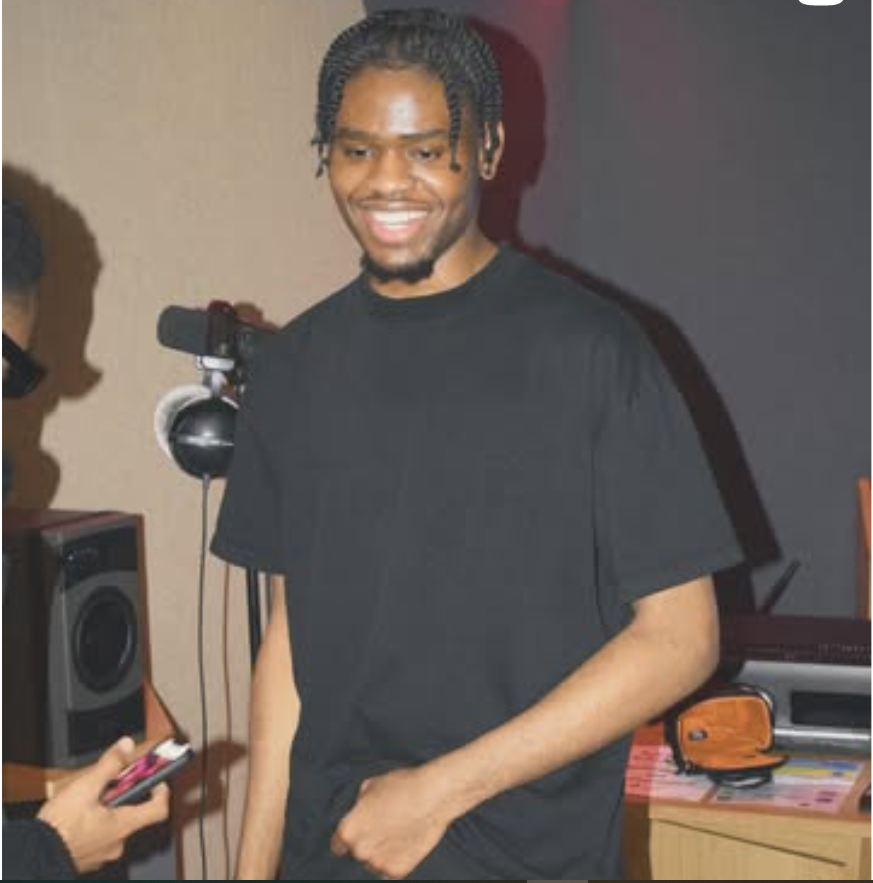
|
Getting your Trinity Audio player ready...
|
Quick Facts
- Real name: Daniel Salako
- Stage name: SKondtrack
- Occupation: Record producer
- Years active: 2019 to present
- Education: BIMM London, Bachelor’s degree in Music and Sound Production (2024)
- Signature production credit: “Gifted,” from Zinoleesky’s debut album Gen Z
- Catalogue size: Over 68 songs, more than 50 million streams (as of 2026)
- Notable collaborators: Zinoleesky, Chop Daily, Anastazie, Brown Joel, BoyPee, Hyce, Viralboy, Uglytwizz
If you are a student of contemporary Afrobeats production, or simply a curious listener trying to understand who shapes the sound behind your favorite records, SKondtrack is a name worth sitting with for a moment. He does not sing the hooks you hum in traffic. He builds the architecture beneath them. And in a genre where the loudest credit often goes to the artist standing in front of the microphone, understanding a producer’s journey teaches you something important about how modern Afrobeats records actually come together.
Let us walk through who he is, how he got here, and why his catalogue matters.
Who Is SKondtrack?
SKondtrack is the professional name of Daniel Salako, a Nigerian record producer known for a versatile, genre-crossing approach to sound design. He began making music professionally in 2019, and by 2026 he had built a catalogue of more than sixty-eight songs and surpassed fifty million streams across platforms. Those are not small numbers for a producer who spent years working largely behind the scenes before wider recognition caught up with him.
What distinguishes SKondtrack from many of his peers is not a single signature sound, but the opposite: a refusal to be boxed into one. His work spans Pop, R&B, Dancehall, Hip Hop, and even EDM, all filtered through a foundation shaped by his Nigerian musical upbringing. Think of him less as a specialist and more as a translator, someone who takes the percussive DNA of Afrobeats and reshapes it to fit whatever genre a collaborator brings to the table.
Early Life and Formal Training
Here is something worth pausing on, because it separates SKondtrack from the self-taught, trial-and-error path that many producers describe. Growing up in Nigeria shaped his early ear for rhythm and melody, and that foundation stayed with him even after he relocated to the United Kingdom. But he did not simply rely on instinct. He pursued formal training at the Tenstrings Music Institute to sharpen his craft, and later enrolled at BIMM London to study Music and Sound Production, earning a Bachelor’s degree there in 2024.
Why does this matter for a student trying to understand the industry? Because it illustrates a growing pattern among Afrobeats’ newer generation of producers: a blend of raw cultural instinct with structured, academic musical education. SKondtrack did not choose one path over the other. He combined both, and you can hear the result in how deliberately his productions are layered.
The Breakthrough: Producing “Gifted”
Every biography needs a hinge point, a moment where quiet consistency turns into visible recognition. For SKondtrack, that moment arrived through his production work on “Gifted,” the opening track of Afropop artist Zinoleesky’s debut album, Gen Z.
This was not a minor placement. The album reached the top of the Apple Music Nigeria chart, climbed to number nine on the Billboard World Albums chart, and debuted at number seven on the Spotify Global Top Album Debut chart. Being trusted with the opening track of a debut album that performed at that level is a meaningful vote of confidence in a producer’s ear, and it functions almost like a thesis statement for the rest of the project.
On “Gifted,” SKondtrack’s production choices favor restraint over noise. Paced drums, warm keys, and strings combine into a minimalist beat that intentionally steps back so Zinoleesky’s vocal delivery can carry the emotional weight of the song. If you are studying production technique, this is a useful lesson in itself. Sometimes the most skillful choice a producer makes is knowing when not to fill every open space in a track.
A Catalogue Built on Versatility
Once you start listening across SKondtrack’s wider body of work, a pattern emerges, though it is a pattern of range rather than repetition. On “Must,” a collaboration with Brown Joel, BoyPee, and Hyce, he leans into Highlife-tinged instrumentation, letting string arrangements add emotional color to the melody. On “Tattoos,” made with Chop Daily, and “Let Me Go,” created alongside singer Anastazie, his production shifts toward a more tender, globally minded pop sound.
Then there is “Anoda Banga,” featuring Chop Daily, Viralboy, and Uglytwizz, where he fuses party-oriented log drums with jazz horns, a combination that should not work as smoothly as it does. Across these projects, musicality tends to be the connective thread. He favors strings, keys, horns, and carefully chosen samples, layered around percussion that remains central to the groove.
This matters for anyone trying to understand what separates a good producer from a distinctive one. Many producers can make a beat sound polished. Fewer can make their creative fingerprint recognizable across radically different genres, from Afropop to UK Garage influences in his work with Chop Daily, to the way he fits African percussion into an urban pop framework when producing for Anastazie.
Living Between Two Musical Worlds
One detail worth reflecting on is SKondtrack’s geographic and cultural positioning. He grew up in Nigeria, absorbed its rhythmic and melodic traditions, and later moved to the United Kingdom to continue his education and career. Rather than choosing one identity over the other, his production often lives in the space between both places.
You can hear this tension, if you can call it that, in tracks like “Let Me Go,” where the log drums are used with restraint rather than dominance, gesturing toward Afrobeats without fully immersing the record in it. This in-between quality is not a weakness. It is arguably what makes his sound useful to such a wide range of collaborators, since he is equally comfortable serving a Nigerian pop record or a more UK-facing urban pop production.
From the Studio to the Stage
Producers are traditionally associated with studios, not stages, but SKondtrack has pushed beyond that expectation. His creative ambition led him to perform at the O2 Shepherd’s Bush Empire in London, as part of the BIMM Graduate Showcase. For a producer trained through both cultural immersion and formal academic study, stepping onto a stage of that stature signals an artist who sees himself as more than a background contributor to other people’s records.
Where His Career Stands Now
As of 2026, SKondtrack is nearly a decade into his professional career, a milestone that carries weight in an industry known for short attention spans and rapid turnover. His catalogue, spanning more than sixty-eight songs and over fifty million streams, reflects sustained output rather than a single lucky placement. The success of “Gifted” and Zinoleesky’s Gen Z album has placed a fresh spotlight on his work, but the depth of his back catalogue suggests this recognition has been years in the making rather than a sudden arrival.
Why SKondtrack’s Story Matters
If there is a lesson worth carrying away from SKondtrack’s journey so far, it is this: influence in Afrobeats does not always announce itself loudly. Some of the genre’s most important contributors are the ones shaping the sound quietly, record by record, until a single high-profile placement finally draws public attention to years of accumulated skill. Understanding producers like SKondtrack gives you a fuller picture of how Afrobeats actually gets made, not just who gets to stand center stage when it succeeds.
His combination of Nigerian musical roots, formal production training, and genuine stylistic range makes him a useful case study for anyone trying to understand where the genre’s production standards are heading next.