
|
Getting your Trinity Audio player ready...
|
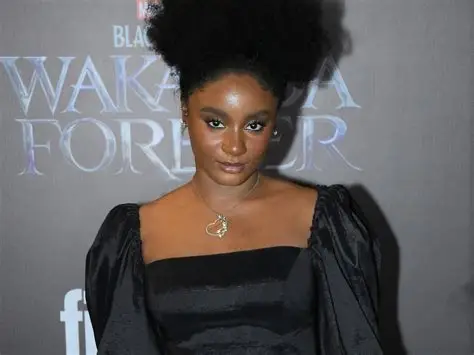
Bloody Civilian is a Nigerian singer, songwriter and record producer known for her alternative approach to African pop music. Born Emoseh Khamofu, she grew up in Abuja, where Nigerian music, jazz, blues, R&B and hip-hop influenced her creative development. She gained wider recognition in 2022 with “How to Kill a Man” and “Wake Up,” her collaboration with Rema for the Black Panther: Wakanda Forever soundtrack. Through projects such as Anger Management and songs that explore identity, relationships and social issues, she has established herself as an artist who values experimentation and honest storytelling.
Quick Facts About Bloody Civilian
- Real name: Emoseh Khamofu
- Stage name: Bloody Civilian
- Place of upbringing: Abuja, Nigeria
- Nationality: Nigerian
- Profession: Singer, songwriter and record producer
- Genres: Alternative Afropop, Afro-fusion, R&B and hip-hop
- Record label: Def Jam Recordings, through its UK-linked 0207 imprint
- Breakthrough song: “How to Kill a Man”
- Major soundtrack appearance: “Wake Up” with Rema, from Black Panther: Wakanda Forever
- Notable projects: Anger Management and Anger Management: At Least We Tried
- Notable collaborations: Rema, ODUMODUBLVCK, Tay Iwar and other Nigerian and international artists
Who Is Bloody Civilian?
Bloody Civilian is an alternative Nigerian music artist whose work combines African musical influences with contemporary pop, R&B and hip-hop. She writes and produces much of her own music, giving her substantial creative control over how her songs sound and what they communicate.
She stands out for writing about subjects that extend beyond conventional love songs and party records. Her music explores misogyny, personal boundaries, social pressure, Nigerian identity and the experiences of people navigating complicated relationships. Her direct lyrics and experimental production have helped her establish a distinctive identity within Nigeria’s alternative music scene.
Her rise also reflects a broader change in African music, where artists increasingly combine singing, songwriting and production rather than limiting themselves to one role. Bloody Civilian’s approach allows her to build songs around her own ideas, experiences and observations.
Early Life and Family Background
Bloody Civilian was born Emoseh Khamofu and grew up in Abuja, Nigeria. Music played an important role in her family life. Her father played bass guitar and performed with a band before pursuing engineering as his main profession, while her mother worked as a physician.
The music she heard at home included blues, instrumental jazz and African pop. As she grew older, she also explored R&B, hip-hop, reggae and other styles that influenced her approach to songwriting.
Bloody Civilian began writing songs as a child. She performed for her parents before taking her original material to church, school performances and talent shows. These early experiences gave her opportunities to develop her confidence and discover how she wanted to express herself through music.
Her interest in production emerged at an early age as well. She started experimenting with audio-editing software when she was about 12 and later began making her own beats. By learning to create music as well as perform it, she developed skills that would become central to her professional identity.
Why Is She Called Bloody Civilian?
Her stage name comes from a phrase she has associated with the way Nigerian soldiers refer to ordinary civilians. Growing up in northern Nigeria, she became familiar with the expression in a context shaped by military violence and the vulnerability of local people.
Rather than accepting the phrase as an insult, she reclaimed it as an artistic identity. The name reflects her interest in challenging expectations and using her platform to express herself without being confined by conventional standards.
It also connects with her wider creative approach. Bloody Civilian often addresses uncomfortable subjects directly, whether she is discussing gender relations, social problems or her own experiences. Her name reinforces that willingness to question established ideas.
Bloody Civilian’s Music Career
From Self-Taught Producer to Recording Artist
Before her breakthrough, Bloody Civilian spent years learning how to write, record and produce music. She developed her skills independently, experimenting with different sounds rather than following a fixed genre formula.
This foundation helped her approach music as both a performer and a creator behind the scenes. She could build a song from an initial idea, shape its arrangement and refine its production around the message she wanted to communicate.
Her early work eventually attracted attention within Nigeria’s alternative music community. One notable appearance came through “Cold Freestyle,” a track associated with SHOLZ and the NATIVEWORLD project from NATIVE Sound System. The exposure helped introduce her to a wider audience and opened the door to larger opportunities.
“How to Kill a Man” and Her Breakthrough
Bloody Civilian’s breakthrough arrived in 2022 with “How to Kill a Man.” The song uses dark humour and sharp lyrics to address misogyny and the treatment of women. Its title is provocative, but the track’s central focus is the frustration and anger that can arise from unequal relationships and social expectations.
The release introduced listeners to her direct songwriting style and willingness to approach difficult subjects without softening their meaning. Its alternative production also distinguished it from more conventional pop releases.
The song helped establish Bloody Civilian as an artist with a clear perspective. Rather than relying only on a catchy chorus, she used the track to make a statement about gender and power, demonstrating how African pop music can address social questions through personal expression.
“Wake Up” With Rema
Another major milestone came in 2022 when Bloody Civilian collaborated with Rema on “Wake Up,” a song featured on the soundtrack for Marvel’s Black Panther: Wakanda Forever.
The opportunity placed her music within a major international film project connected to African culture and storytelling. The soundtrack reached audiences well beyond Nigeria’s music scene and introduced her to listeners who might not otherwise have encountered her work.
Bloody Civilian also contributed to the song’s production, working alongside composer and producer Ludwig Göransson. “Wake Up” demonstrated her ability to combine African pop influences with Caribbean sounds and contemporary global production.
The soundtrack appearance became one of the most important early achievements in her career. It showed that her experimental approach could fit within a large international project without losing its distinctive character.
Anger Management and Her Artistic Identity
In 2023, Bloody Civilian released her debut EP, Anger Management. The project brought together several of the ideas that had begun to define her work, including personal boundaries, anger, gender relations and social criticism.
Songs such as “I Don’t Like You” and “Where I Am From” showed different sides of her writing. The former takes a blunt approach to personal conflict, while the latter reflects on the conditions and political decisions affecting Nigerian society.
The EP’s title suggests an attempt to understand anger rather than simply suppress it. Bloody Civilian uses strong emotions as material for songwriting, turning frustration and disagreement into direct, sometimes confrontational music.
She followed the project with Anger Management: At Least We Tried, which revisited and reworked material with contributions from artists including Tay Iwar, ODUMODUBLVCK and JELEEL! The release demonstrated her interest in collaboration while allowing other performers to bring different interpretations to her songs.
These projects helped distinguish her from artists who focus primarily on commercially familiar pop structures. Her work can be accessible while still making room for uncomfortable ideas and unconventional arrangements.
Other Bloody Civilian Songs and Collaborations
Bloody Civilian’s catalogue includes solo tracks and collaborations that demonstrate her range as a songwriter and producer.
- “How to Kill a Man”: Her breakthrough single, known for its pointed commentary on misogyny.
- “Wake Up” featuring Rema: A collaboration on the Black Panther: Wakanda Forever soundtrack.
- “I Don’t Like You”: A direct song about conflict, rejection and personal boundaries.
- “Where I Am From”: A socially conscious track addressing Nigerian realities.
- “Mad Apology”: A song that further explores relationship tensions and emotional conflict.
- “Ladida”: A release that highlights her work as both a vocalist and producer.
- “Blood on the Dance Floor”: A collaboration featuring ODUMODUBLVCK and Wale.
- “WhatsApp”: A collaboration with Vibez Inc and Seyi Vibez.
- “Family Meeting”: A collaborative release featuring Enny, Joeboy and Majeeed.
Her catalogue shows a willingness to move between personal storytelling, social commentary and more rhythm-driven songs. She has also worked with artists whose styles differ from her own, expanding the possibilities of her sound.
Bloody Civilian’s Musical Style and Influences
Bloody Civilian describes her approach as Afro-fusion, bringing African influences into a wider field of musical experimentation. Her songs can draw on Afropop, R&B, hip-hop, jazz, blues, reggae and other styles without following a rigid genre formula.
She has cited artists such as Fela Kuti, Frank Ocean, Kid Cudi, Cynthia Morgan and Aṣa among her influences. These references help explain the combination of African musical identity, alternative production and emotionally direct writing in her work.
Her production skills are especially important. Because she understands the process behind the music, she can use instrumentation, rhythm and arrangement to reinforce the mood of a song. That creative control also allows her to explore unconventional ideas without depending entirely on another producer to realise them.
Her lyrics remain a central part of her identity. Whether she is writing about relationships or social conditions, she tends to favour direct expression over vague statements. This gives her music a strong point of view and helps listeners understand the experiences or frustrations behind each track.
Bloody Civilian’s Recent Career and Global Recognition
Bloody Civilian’s work has continued to attract attention beyond Nigeria. In October 2026, she was included in international music coverage discussing the limits of using “Afrobeats” as a label for the many different sounds emerging from Africa. She has argued for greater recognition of the diversity of African music and the experimental approaches artists use.
That position fits her own career. Although her music draws on Afropop, she does not want one genre label to define everything she creates. Her work crosses boundaries between pop, R&B, hip-hop and alternative production.
In October 2026, she was also touring with South African star Tyla, including a scheduled performance in Berlin on October 27. The tour placed her before international audiences alongside one of the continent’s most prominent contemporary pop performers.
These developments reflect the growing interest in African artists whose work does not fit neatly into one category. Bloody Civilian’s international exposure has grown through soundtracks, collaborations, releases and live performances, while her creative identity remains closely connected to her Nigerian background.
Bloody Civilian’s Age and Personal Life
Bloody Civilian’s exact date of birth and age have not been reliably confirmed in public biographical information. Some profiles have described her as being in her twenties, but without a verified birth date, it would be misleading to give a precise age.
She keeps many details of her private life away from public attention. Interviews and artist profiles have focused mainly on her music, family influences, production skills and views on the Nigerian creative industry.
Her family has played a significant role in her musical development. Her father’s experience as a musician exposed her to music from an early age, while her parents encouraged her early songwriting and performances.
Conclusion
Bloody Civilian has built her career around creative independence, musical experimentation and honest storytelling. Her upbringing in Abuja, early interest in production and willingness to address difficult subjects helped shape a sound that moves between African pop, R&B, hip-hop and alternative music.
“ How to Kill a Man” introduced her direct songwriting to a wider audience, while “Wake Up” with Rema connected her work to the global reach of the Black Panther: Wakanda Forever soundtrack. Her Anger Management projects further established her as an artist who treats music as a space for personal expression and social commentary.
As she continues to work with artists, release new music and perform internationally, Bloody Civilian remains part of a generation expanding the definition of contemporary African music. Her career demonstrates that artists can represent their roots while experimenting beyond the expectations attached to a single genre.
Join our WhatsApp channel and Telegram channel for latest music updates.
Kindly follow and join both channels to stay updated with the latest music.